

How to Choose the Right Dress
What to Notice Before You Buy
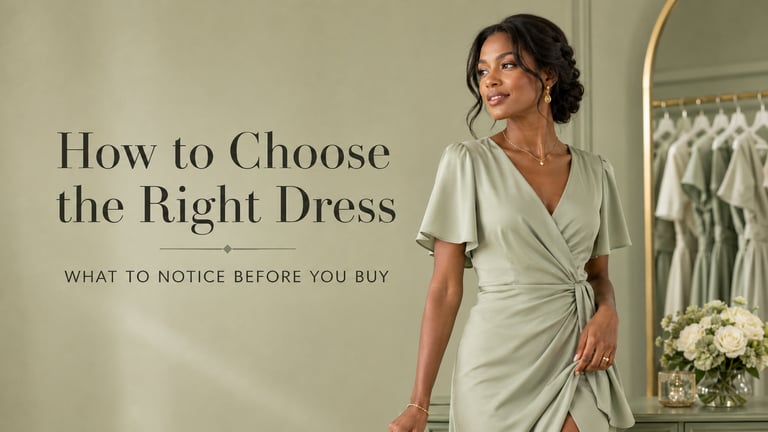
A beautiful dress can catch your attention immediately, but appearance is only one part of choosing the right one. The best dress should suit the occasion, sit properly on your body, feel comfortable and work with the way you plan to move throughout the event. Before making your final decision, take a moment to notice the following details.
1. The Occasion and Dress Code
Start by asking where and when you will wear the dress. Consider:
Is the event formal, semi-formal or casual?
Is it taking place during the day or evening?
Will it be indoors or outdoors?
Is there a specific dress code?
Will you be sitting, standing, dancing or walking for long periods?
A dress can be beautiful but still feel wrong if it does not match the setting. For example, a long embellished gown may suit a formal evening event, while a lighter midi dress may be more suitable for a garden wedding or daytime celebration.
2. The Fit Around the Bust, Waist and Hips
Do not judge a dress only by its size label. Sizes can vary significantly between brands and styles. Pay attention to how the dress sits around the main fitting areas. The bust should feel secure without pulling, flattening or creating gaps. The waistline should sit at the correct point on your body, and the fabric should fall naturally over the hips. Look for signs that the fit needs adjustment:
Horizontal pulling lines
Gaping around the neckline
Fabric gathering unexpectedly
A waist seam sitting too high or low
A zip that is difficult to close
A skirt that twists while you walk
A slightly imperfect fit does not always mean the dress is wrong. Many issues can be corrected with professional alterations.
3. The Shoulders and Neckline
The shoulder area affects the entire balance of a dress. Check that straps stay in place and that the shoulders do not feel restrictive. If the dress has sleeves, lift your arms and move them naturally. The neckline should feel secure and suit the level of coverage you want. Lean forward slightly and turn from side to side to make sure it stays in position. Different necklines also create different visual effects:
V-necklines can create a longer vertical line.
Square necklines can add structure.
Off-the-shoulder styles highlight the shoulders and collarbone.
High necklines can feel elegant and refined.
Sweetheart necklines create a softer, feminine shape.
Choose a neckline that you will feel comfortable wearing for several hours.
4. Comfort and Movement
Never assess a dress only while standing still in front of a mirror. Walk, sit down, raise your arms and turn around. Imagine wearing it during the actual event. Ask yourself:
Can I sit comfortably?
Can I walk without holding the dress?
Can I dance in it?
Does anything scratch, pinch or slip?
Will I need to adjust it constantly?
A dress that looks perfect but causes discomfort will affect how confidently you wear it.
5. The Silhouette
The best silhouette is not determined by strict body-shape rules. It depends on the effect you like and how the dress makes you feel. Common silhouettes include:
A-line: Fitted through the upper body and gradually widening towards the hem. It is versatile and suitable for many occasions.
Fit-and-flare: Fitted at the bodice and fuller through the skirt, creating a defined waist.
Column or sheath: Falls relatively straight and creates a clean, modern appearance.
Wrap dress: Uses a crossed front and adjustable waist, often creating a flexible and comfortable fit.
Ball gown: Features a fitted bodice and dramatic full skirt, making it suitable for highly formal occasions.
Slip dress: Has a soft, fluid shape and is usually made from satin or a similar lightweight fabric.
Try different silhouettes rather than automatically choosing the style you normally wear.
6. The Fabric
Fabric changes how a dress looks, feels and moves. Structured fabrics hold their shape and may create a more formal or tailored appearance. Soft fabrics such as chiffon move more freely and create a lighter effect. Satin can look luxurious but may show creases or undergarment lines more easily. Stretch fabrics offer comfort but should still provide enough support. Also consider the season. Heavy fabrics may become uncomfortable during a summer event, while very light fabrics may not suit cooler weather without an additional layer.
7. The Colour in Different Lighting
A colour can appear different under showroom lighting, daylight and evening lighting. Where possible, look at the dress near natural light. Consider how the colour works with your skin tone, hair colour and accessories. You do not need to follow traditional rules about which colours you are “allowed” to wear. Focus on whether the colour makes you feel bright, balanced and confident. Also consider whether the event has any colour expectations, particularly for weddings, bridal parties or themed celebrations.
8. The Length and Your Shoes
Dress length should be checked with the shoes you expect to wear. A floor-length gown may need hemming, while a midi dress can sit very differently depending on your height. Walk in the dress and check whether the hem catches under your shoes. For dresses with a train, consider whether you will need a bustle or another way to manage it during the event. Do not choose uncomfortable shoes simply because the dress was fitted with a certain heel height. It is usually better to alter the dress to suit shoes you can comfortably wear.
9. Undergarments and Support
The right undergarments can improve the way a dress sits, but the dress should not depend on complicated solutions to remain wearable. Check whether normal bra straps are visible, whether the fabric is transparent and whether the dress has built-in support. Bring or wear the type of undergarments you expect to use for the event when attending a fitting. This gives you a more accurate view of the final result.
10. Alteration Potential
Many dresses are not expected to fit perfectly straight from the rack. Common alterations include:
Shortening the hem
Adjusting straps
Taking in the waist
Refining the bust
Closing a neckline slightly
Adding cups or support
Adjusting sleeves
Before rejecting a dress because of one fitting issue, ask whether it can be altered. However, alterations have limits. A dress that is significantly too small, uncomfortable through the shoulders or unsuitable in its basic structure may not be the right starting point.
11. How You Feel in It
This is the final and most important point. When you put on the right dress, you should not spend the entire time focusing on what you want to hide or change. You should be able to see yourself attending the event, moving comfortably and enjoying the moment. Ask yourself:
Do I feel like myself?
Do I feel confident?
Am I comfortable?
Will I be happy to see this dress in photographs?
Am I choosing it because I love it, or because someone else expects me to?
The right dress does not need to be the most dramatic or expensive option. It is the one that brings together fit, comfort, occasion and personal style.
Find the Dress That Feels Right
At Thread & Trend, our private showroom experience gives you the time and personalised guidance to explore different silhouettes, colours and styles without the pressure of a busy store.